


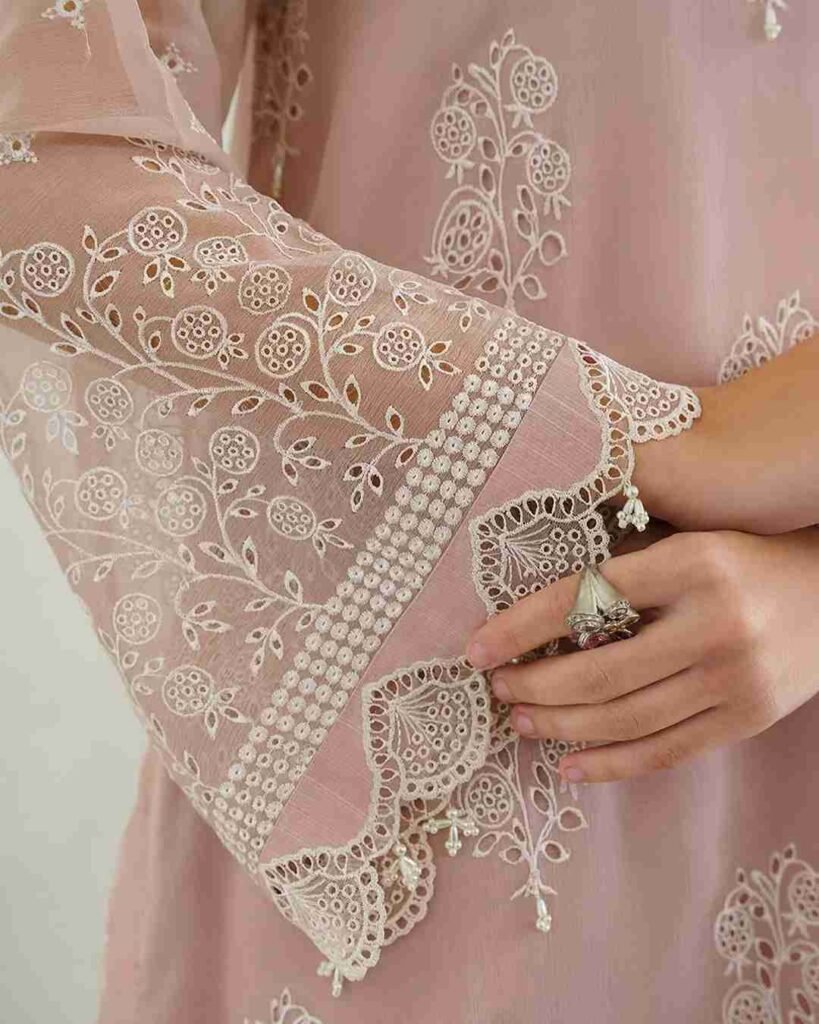
By using embroidered lace fabric for bridal wear, evening gowns, and high-end fashion pieces, the delicate patterns, versatile textures, and light drape have been the main reasons for these luxury garments. If you are a designer, boutique owner, or manufacturer sourcing lace fabric, then knowing how the different types of laces and their quality are will assist you in making a good choice of material for your product.
Buying Embroidered Lace Types
When you decide on lace by the yard, the first step is to determine the construction. Understanding Schiffli Lace vs. Shuttle Lace vs. GPO Lace also helps you choose the right production technique for your design. Common lace types include tulle lace, guipure lace, Chantilly lace, corded lace, and sequined lace, each offering its own distinct beauty. Tulle lace, soft and wedding-like, is often used in bridal lace fabric. Guipure lace is heavier and does not rely on net backing, creating bold geometric patterns. Corded lace provides a raised texture that is ideal for eveningwear and haute couture. Knowing these differences makes it easier to match the material with your design intentions.
Focus on Stitch Density and Detailing
The quality of embroidered lace fabric is often reflected in the embroidery work. The use of high stitch density greatly contributes to the creation of rich and clean patterns that will further stand out on the garment. Do not fail to check the lace from its back; it should be neat with no threads hanging loose. For manufacturers that purchase lace fabric in bulk, uniformity over several yards is critical. The designs, hues, and embroidery need to be consistent so that the garment panels will not be mismatched.
Match Lace Type to the Intended Use
Not every lace type is suitable for every project. For bridal purposes, the most suitable laces would be soft embroidered lace fabrics with delicate motifs, as they would not only flow with the body but also bring out the angelic figure. On the other hand, formal gowns are made to shine with sturdy and evenly sequined lace fabric by the yard, just as they make it clear that they are taking the lead in elegance. Lightweight lace perfectly fits to be used as a trim, for making up sleeves, or as an overlay, while guipure fits a bolder design that wants to be seen without losing the body. So, identify the drape and transparency first before ordering any lace.
Understand the Base Fabric
The base fabric is the main determinant of the bridal lace fabric’s durability and comfort. Tulle, mesh, organza, and net are the most outstanding foundations that we work with. Oftentimes, bridal lace fabric will use soft tulle for the reason that it layers well and is gentle on the skin. If a lace with strong shape retention is needed, guipure lace is a great option since it has no net backing. The same holds for checking embroidered lace fabric: you can gently stretch the base fabric to see how strong it is.
Check Durability and Fabric Stability
Some laces exhibit slight stretching properties, and there are others that are utterly stable. The stretch lace will come in handy for the fitted gown, and the stable lace will give precision lines for the structured garments. The strongest lace is the one that lasts through cutting, sewing, and production. Always test a sample before making a large purchase of wholesale lace fabric.
Verify Supplier Reliability
A reliable supplier is just as significant as the lace itself, which is why understanding how to choose the Right Embroidery Fabric Supplier matters so much. Go for sellers who have experience handling bridal lace fabric by the yard as well as wholesale lace fabric orders. Sample requests, color consistency checks, and confirmation that embroidery patterns repeat correctly across multiple yards are all part of a responsible supplier’s role. A dependable supplier ensures smooth production and delivers quality control that exceeds expectations.
FAQs
How to choose the right lace type for your product?
Match the lace to your garment’s drape, structure, and style. Soft lace suits bridalwear, while structured lace works for evening and couture pieces.
How to recognize if the lace is of high quality?
The signs of high-quality lace are clear embroidery, thin threads, durable base fabric, and regular patterns.
What are the constituents of good-quality lace?
Most often, premium lace is made from fine, various polyester, nylon, cotton blends, or viscose.
Is lace suitable for bulk production?
Yes, provided the supplier guarantees consistent patterns and color matching.
Which lace is best for bridalwear?
Tulle lace, Chantilly lace, and delicate embroidered lace are ideal for soft, elegant bridal designs.