


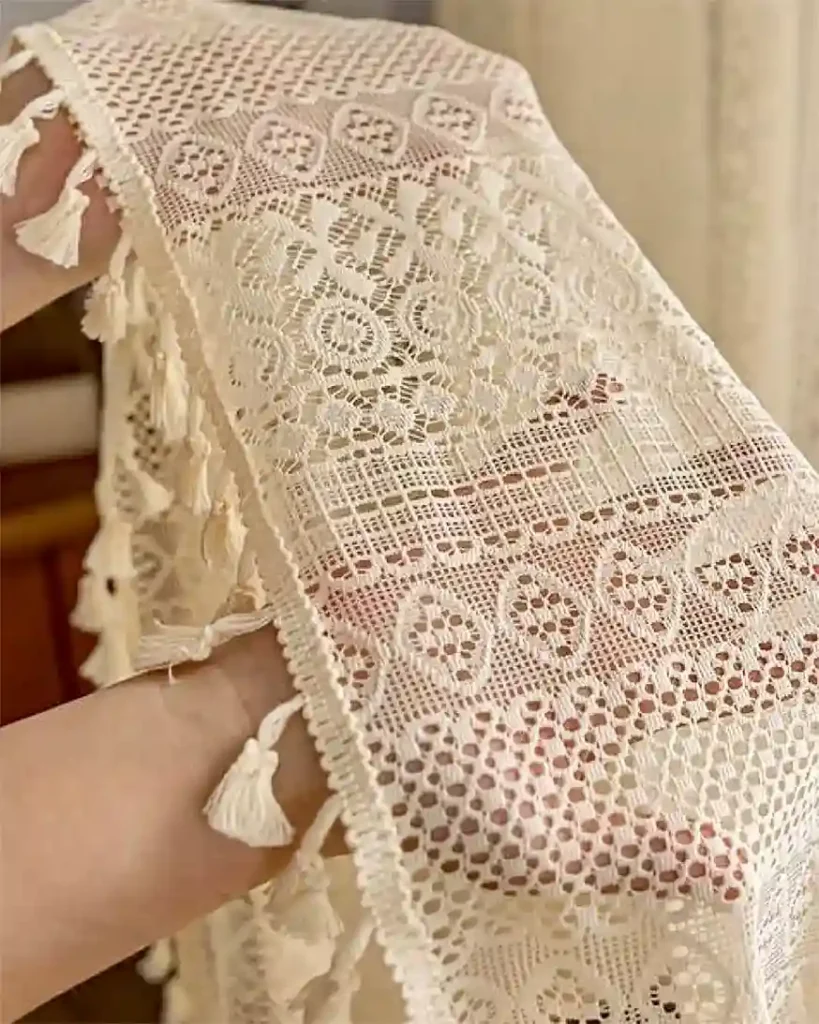
In the fierce competition for home textile designing, the luxury is actually found in the smallest details. The quality of the base fabric is not the only thing for the artisan treatment to make a simple product a piece of art. Two embroidery techniques make up the basics for the luxuries and close-to-the-skin experiences for the importers and brands targeting the premium market: cutwork and sequined embroidery.
The techniques, most of the time performed on fine hosiery embroidery bases, bring about an elegance that is very actively demanded by the consumers of good taste. Here’s how they bring the home décor to the next level.
The Glamour of Sequence Embroidery: Luminous Detail
Though cutwork gives depth, sequence embroidery pours out light. Under this technique, sequins of a flat surface and reflective nature (professional sequins) are gently stitched onto the fabric following the intricate patterns. This process gives the light an interesting play, and thus the fabric glows a bit, like a queen, through the delicate touch of luxuriousness, which is brought to the whole ambience.
Its participation in home textiles is a total changeover:
- Accent Cushions: Sequence motifs on velvet/sequins or silk offer a glamorous contrast to matte fabrics; thus, the whole room becomes a focal point.
- Bedspreads & Wall Hangings: Thus, the placing of the sequence in the right pattern can lead the viewer’s gaze and make a powerful design statement, drawing the whole room’s aesthetics up.
- Curtain Panels: The sequence subtly set within the curtains’ edges will draw sunlight and interior lighting, causing the curtain to appear as if the drama of luxury has been extended.
- Sequined embroidery: The luxury of a modern-day sale, which makes it a choice of the markets that value the combination of traditional craftsmanship and modern-day glamour.
The Foundation: Net Embroidery for Sheer Elegance
Cutwork and sequence embroidery mostly find a similar ground in netting embroidery. By employing a net that is as transparent as the base fabric or cutwork fabric, one can create even the lightest and most delicate designs. The process of embroidering on net or cutwork fabric produces items that filter light beautifully, making them ideal for sheer curtain panels, decorative overlays for bedding, or layered cushion covers. The embroidery adds body and design, while the net or cutwork fabric allows one to feel an everlasting sense of luxury.
Why This Matters for Importers & Brands
Buying tissues with such treatments is a long way from high pricing and building a brand with a reputation for quality in the home textiles market. Consumers are pulled towards the products, even during mass production, which are completely made with the skilled hands of the manufacturers. Cutwork and sequin embroidery are the most visible signs of such craftsmanship; thus, they become strong differentiation and growth tools.
Are you ready to add exceptional luxury to your home textiles? Find out more by contacting us to discuss our vast experience in the areas of cutwork, sequencing, and net embroidery.
FAQs
1) What home textile products are most suitable for cutwork embroidery?
Cutwork goes hand in hand with items of high and textural demand, like, for instance, cushion covers, table linens (runners, placemats), and very nice pillowcases or duvet covers with borders.
Is sequin embroidery suitable for a home that gets a lot of use?
Yes, if the work is done right. We do a secure locking stitch for each sequin and use high-quality threads; thus, the design will survive frequent use and cleaning, which is why it is suitable for cushions and decorative throws.
Is it possible to have these methods together on one item?
Of course. Using cutwork and sequence embroidery together on a net, for instance, can result in a breathtaking, 3-dimensional product that has the qualities of both a textured and a sparkling item; therefore, the luxury is ultimate.
In case of bulk orders for embroidered home textiles, what is the usual lead time?
The timeframes vary with the order’s difficulty and size. For regular patterns, expect 4-6 weeks for mass production. Unique designs require an extra 1-2 weeks for making the sample and getting the green light.
Are there any custom design services available?
Indeed, the design and technical groups at our company can develop personalized cutwork and sequence patterns based on your concepts or mood boards, enabling you to create a distinct, brand-consistent home textile collection.